

In the rapidly evolving landscape of global dental health, the demand for highly specialized, resilient diagnostic and surgical tools has never been greater. Dental distribution companies, bulk dental suppliers, and hospital procurement departments face a distinct challenge: sourcing instruments that are delicate enough to perform micro-surgical procedures within the tight, sensitive confines of the oral cavity, yet strong enough to withstand high-torque forces and thousands of high-temperature sterilization cycles.
When clinics choose tools, they don’t just look at pricing; they judge the tactile performance of a root elevator or the grip stability of extraction forceps. For global export buyers, selecting a dental instruments manufacturer requires an analytical approach to engineering, material science, and design ergonomics. This comprehensive industry guide outlines the exact parameters required to source premium dental tools at a wholesale scale.
1. Anatomy of Dental Metallurgy: Balancing Strength and Flex
Unlike general surgical tools, dental instruments are subjected to unique physical stresses. Periodontal scaling requires micro-vibrational flexibility without structural bending, while tooth luxation demands immense torque control. To achieve these properties, professional manufacturers rely on specific variations of high-tensile stainless steel.
The Prevention of Hydrogen Embrittlement
A major risk for low-grade dental instruments is structural snapping during high-pressure extractions. Premium manufacturers prevent this through a highly precise, vacuum-controlled heat treatment process. This molecular tempering ensures that high-carbon martensitic steel gains structural toughness while eliminating trapped hydrogen atoms—a primary cause of unexpected steel brittleness under stress.
2. Engineering Extraction Forceps: The Crucial Point of Adaptation
Dental extraction forceps are the most capital-intensive handheld tools in an oral surgery clinic. When global distributors evaluate wholesale forceps, the primary focus must be placed on beak adaptation.
A poorly machined extraction beak creates a limited point-contact on the tooth crown. When a dental surgeon applies vertical and rotational force, this localized pressure frequently shatters the crown or snaps the root tip beneath the gumline, complicating the surgery.
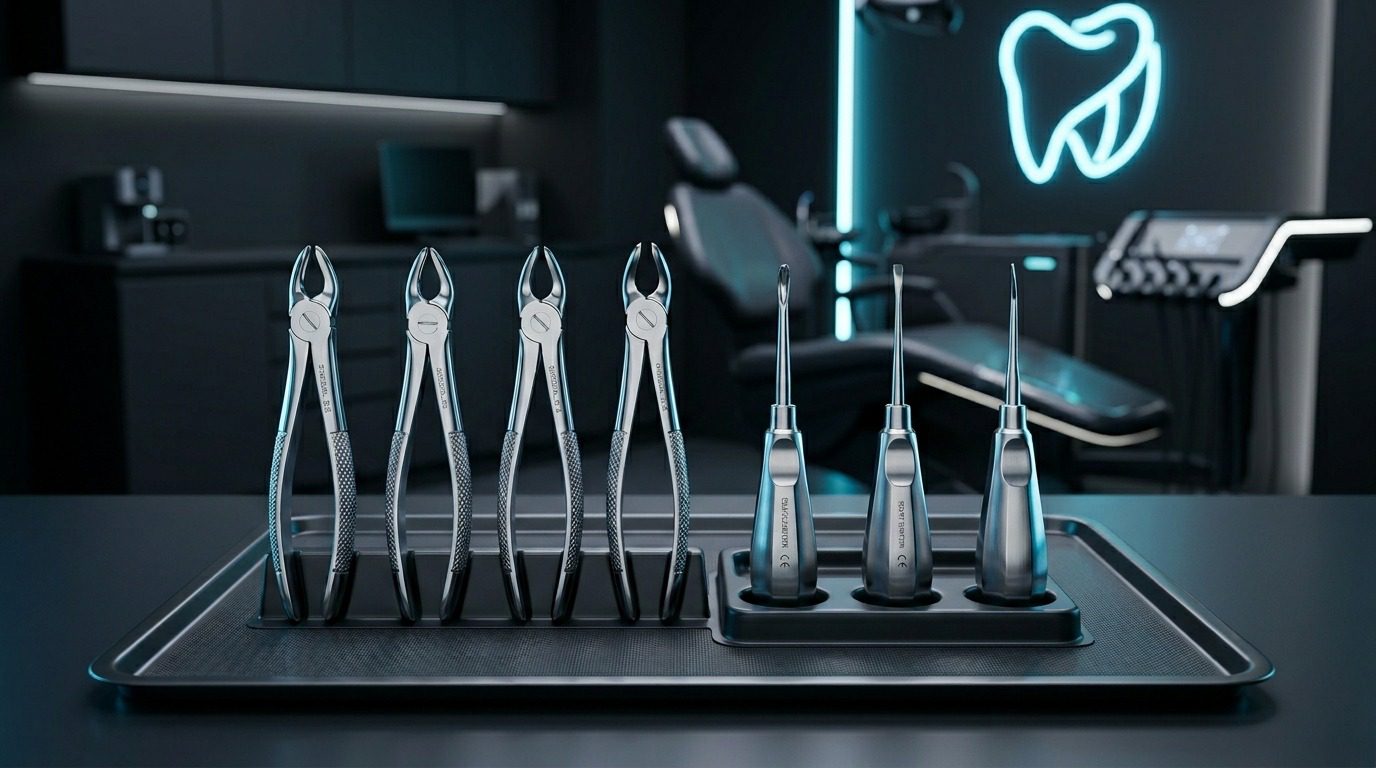
Premium forceps—such as the industry-standard Universal #150 and #151 lines—are engineered with multi-axis CNC machines to ensure anatomically contoured, hollow-ground beaks. This geometry ensures surface-contact adaptation, wrapping seamlessly around the root anatomy. This uniform force distribution allows for clean luxation with minimal structural effort, a feature that elite dental practices demand.
3. Tactile Sensitivity and the Science of Handle Ergonomics
Dental professionals perform highly repetitive movements for hours daily, making carpal tunnel syndrome and hand fatigue a widespread career hazard. Consequently, handle design has become a major selling point in the dental distribution sector.
Hollow vs. Solid Diagnostic Handles
For instruments like periodontal probes, dental mirrors, and explorers, the weight of the handle directly dictates the practitioner’s tactile sensitivity. Premium diagnostic tools utilize thin-walled, hollow core handles. By reducing the overall weight of the tool, tactile feedback from the tip is maximized, allowing clinicians to feel subtle subgingival calculus deposits or microscopic enamel variances effortlessly.
Knurling and Traction Patterns
In oral surgery and scaling procedures, moisture control is a constant challenge. Wet environments demand reliable grip textures. Top-tier manufacturers utilize cross-hatched diamond knurling or deep horizontal ribbing on their handles. These flutes are machined deep enough to prevent slipping while wearing nitrile gloves, yet are engineered with rounded crests to ensure they do not catch glove material or trap bacterial bio-burden during cleaning.
4. Subgingival Performance: Ensuring Longevity in Scalers and Curettes
Periodontal instruments, including Gracey curettes and sickle scalers, live and die by their edge retention. If a scaler blunts after just a handful of scaling and root planing (SRP) sessions, the dental hygienist must constantly grind the blade down, rapidly reducing the operational lifespan of the instrument.
To counteract this, premium Sialkot manufacturers implement advanced cryogenic processing. After standard thermal hardening, the cutting tips are subjected to ultra-low freezing temperatures below -120°C. This advanced process converts unstable residual steel structures into highly durable, wear-resistant martensite. For a dental distributor, purchasing cryogenically treated curettes translates directly into a massive reduction in customer product returns and a powerful reputation for quality in the dental community.
5. Global Export Compliance and Ultrasonic Cleaning Validation
Shipping dental tools internationally requires total compliance with healthcare import protocols. Because these instruments come into direct contact with compromised mucous membranes and deep alveolar bone spaces, clean manufacturing verification is strictly monitored by customs and hospital audits.
Passivation Testing
Every wholesale dental tool batch must undergo rigorous chemical passivation validation. This process uses nitric or citric acid baths to strip out structural free-iron particles from the surface, leaving a pure chromium-oxide skin layer. Manufacturers verify this using specialized copper sulfate or salt-spray chamber testing to guarantee the instruments will not rust, discolor, or react chemically inside chemical vapor autoclaves.
Traceability Markings
To pass European and American medical device tracking audits, high-quality dental tools must be clearly laser-etched with a unique device identifier (UDI), country of origin, and clear batch numbers. This ensures that any clinical facility can trace an individual explorer or elevator back to the exact manufacturing day, metallurgical batch, and inspection shift.
Conclusion: Driving E-Commerce Growth via Premium Supply Chains
For global dental suppliers and procurement agencies, building a sustainable brand requires moving away from cheap, uncertified novelty tools and investing in structurally sound, engineered dental instruments.
By aligning your wholesale procurement with a manufacturer that prioritizes surface-contact beak adaptation, hollow ergonomic handle balance, and validated international passivation processing, your business can capture market share from high-priced European brands. Reliable tools reduce clinical stress, elevate professional reputations, and form the backbone of a successful, thriving global dental supply network.